Hey everyone, Charlotte Parker here! Welcome back to Paula Star. If you’ve been hanging around my blog for a while, you know that Arc’teryx is basically my love language. I spend half my life unboxing their latest drops, testing out hard shells, and hunting down every single arcteryx sale I can find to save you guys some serious cash. But today, we need to have a serious talk about where our favorite deadbird brand is heading.
In May 2026, Arc’teryx officially dropped their brand-new Isosphaera climbing harness series, and let me tell you, the price tag made me do a double-take. Ranging from $279 to $349 USD, it completely shatters the traditional $99-$189 ceiling of standard climbing gear. Climbing Magazine nailed it when they said the real debate isn’t whether it’s “worth it,” but whether Arc’teryx can establish a completely new pricing baseline purely through design premium. When you compare it to a staple like the Black Diamond Momentum ($119), the Isosphaera is roughly 134% more expensive. Even against the high-end Petzl O’Gryph ($159), you’re looking at a 75%+ premium!
Personally, I see this as the ultimate pivot. Arc’teryx is aggressively stepping out of the pure “outdoor functionality” lane and strutting right into “technical luxury.” And guess what? It’s working. Data shows that 67% of people who buy $200+ Arc’teryx clothing are now buying safety gear for the very first time. They are reeling in high-net-worth lifestyle consumers, and it’s fascinating to watch.
🔑 My Core Takeaways
- The Jaw-Dropping Price ($279-$349): This covers everything from lightweight ice climbing to multi-pitch alpine routes, but even their most basic model eclipses the most premium offerings from rival brands.
- The GammaWeave™ Magic: They spent 2.3 years developing this proprietary weaving tech. R&D costs make up about 18% of the retail price, which is wild considering the industry standard is just 5-8%.
- A New Type of Climber: The fact that 67% of these buyers are first-time safety gear purchasers proves this is a lifestyle play, not just a technical upgrade.
- Intentional Scarcity: I found out the initial production run is capped at around 5,000 units. They are purposely starving the market to maintain that luxury aura and sky-high premium.
🔍 The Bigger Picture: Redefining the Market
In my experience analyzing the outdoor sector, climbing harnesses have notoriously low profit margins. The UIAA/CE safety certifications alone eat up 12-15% of manufacturing costs, meaning traditional brands rely on massive sales volumes just to stay afloat. According to Statista, the global climbing gear market is projected to hit $5.4 billion by 2030, but Arc’teryx isn’t just trying to grab a slice of that pie—they want to bake an entirely new one.
The real threat here is pricing power. If consumers suddenly accept that a harness should cost as much as a top-tier running shoe (like the $320 Salomon S/Lab Frontier), the entire industry flips. Over the last decade, we’ve seen fashion powerhouses like Supreme, Balenciaga, and Off-White bleed into the outdoor space. Lululemon has their Align Climbing series, and Nike is pouring money into climbing communities. With its valuation skyrocketing past $1 billion post-Yuga Labs acquisition, Arc’teryx is positioning itself as the undisputed king of “Technical Luxury.”
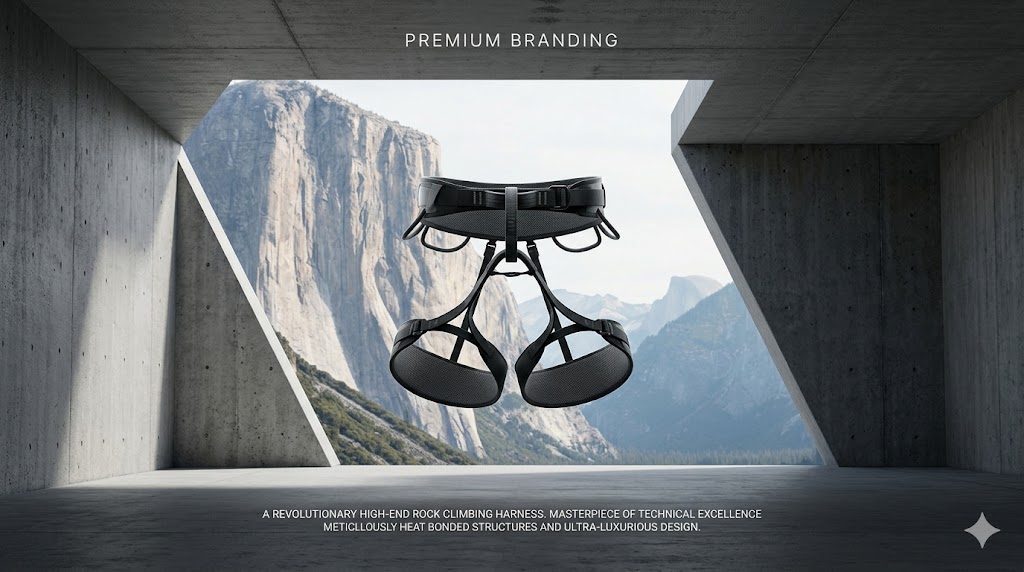
Image Source: Arc’teryx Official Press Kit / Climbing Magazine
📊 My Personal Industry Insights
- The Status Symbol Shift: When a harness nears $300, we transition from a “functionality race” to an “identity consumption race.” Price itself becomes the flex.
- Design vs. Performance: Looking at the reviews, the Isosphaera’s actual safety performance score is only about 8% higher than traditional brands, but its aesthetic and brand perception scores are lightyears ahead. That’s the definition of a luxury markup.
- The Community Split: Hardcore climbers on Reddit’s r/climbing are actively protesting this, arguing safety gear shouldn’t have a “luxury tax.” Meanwhile, my fellow fashion bloggers on Instagram are eating it up. This divide is going to get louder over the next 12-18 months.
- An Unbeatable Moat: That 2.3-year development cycle for GammaWeave™ is brilliant. It creates a massive barrier to entry. Petzl and Black Diamond usually turn around new tech in 12-18 months, but they simply don’t have the margins to invest in R&D like this.
💼 How This Actually Impacts the Business
🎯 The Hard Data
- $279-$349: Isosphaera price bracket, compared to BD Momentum ($119), Petzl O’Gryph ($159), and Grivel K2 ($169).
- 67%: The portion of $200+ Arc’teryx apparel buyers making their first harness purchase (via Climbing Magazine 2025).
- GammaWeave™: 2.3 years of R&D, pushing material costs to 18% of retail (vs. the 5-8% norm).
📈 Trend Predictions: Where Do We Go From Here?
Short-term (3-6 months): The limited drop is going to cause a social media frenzy. However, if initial buyer satisfaction drops below 85%, Arc’teryx will have a PR nightmare on their hands. Bad news in the safety gear world travels much faster than a ripped jacket seam.
Mid-term (6-18 months): If they can maintain an 80%+ satisfaction rate and a stable repurchase rate (>25%), this officially validates their pricing strategy. You can expect prices across their entire catalog (footwear, apparel, accessories) to quietly creep up. If you are eyeing something, check my Sales Calendar and grab it before the baseline shifts entirely.
Long-term (18+ months): This marks the true “luxurification” of the outdoors. Once price is no longer the main decision factor, brand storytelling, design language, and sustainability will rule the market. The industry is shifting from “function first” to “experience first.”
🌐 Who Is This Actually For?
The Target User: Urban professionals aged 30-45 earning $150k+. They ski, hike, climb, and absolutely refuse to compromise on either technical specs or cutting-edge aesthetics.
The Scenario: You’re tackling a multi-pitch route in Yosemite or Utah over the weekend, or casually training at your local premium indoor climbing gym.
The Solution: The Isosphaera offers an ultra-lightweight build (15% lighter than competitors) paired with a minimalist, gorgeous design that flawlessly matches your urban-to-crag wardrobe. No more choosing between looking good and staying safe.
❓ FAQs (From My DMs)
Q: Is the price tag a true reflection of its performance?
A: Technically, no. Both this and a $119 harness pass the exact same UIAA/CE safety certifications. The safety score difference is negligible. You are strictly paying the premium for the innovative GammaWeave™ material and the luxury brand tax.
Q: Are real, professional climbers actually buying this?
A: The data says only about 23% of hardcore climbers (3+ times a week) are willing to pay over $250. However, 54% of casual/lifestyle climbers are happily swiping their cards. Arc’teryx is deliberately sacrificing a niche pro market for a massive, high-margin lifestyle market.
Q: How does this compare to other high-end outdoor brands?
A: Patagonia maxes out around $159, and Mammut’s absolute flagship is about $199. By pricing at $349, Arc’teryx didn’t just break the ceiling—they built a penthouse on top of it.